
How Spinal Decompression Relieves Pressure on the Spine

How Spinal Decompression Relieves Pressure on the Spine

How Spinal Decompression Relieves Pressure on the Spine

Have you ever had back pain that makes you pause halfway through putting on your shoes? Often, that discomfort stems from a simple source: too much pressure inside your spine, like a cushion that has been squeezed for too long.
If you are living with this, you might feel stuck. Spinal decompression therapy offers a different path. It is a gentle, non-surgical treatment designed to do one key thing: carefully relieve that internal pressure to give your spine room to recover.
Understanding the Pressure: Your Spinal Cushions and Nerves
Think of your spine as a stack of bones with soft, gel-like discs between them. These discs are your natural shock absorbers. Over time, due to injury, daily strain, or natural aging, these discs can become compressed or bulge outward. This puts pressure on the delicate nerves that branch out from your spinal cord.
This pressure is what sends those sharp or aching signals, pain down your leg (sciatica), stiffness in your back, or a feeling of numbness. Your body is telling you something is pinched and needs space.
How Decompression Creates Gentle Relief
Spinal decompression is all about gently easing pressure from your spine, giving it the space it needs to relax and heal.
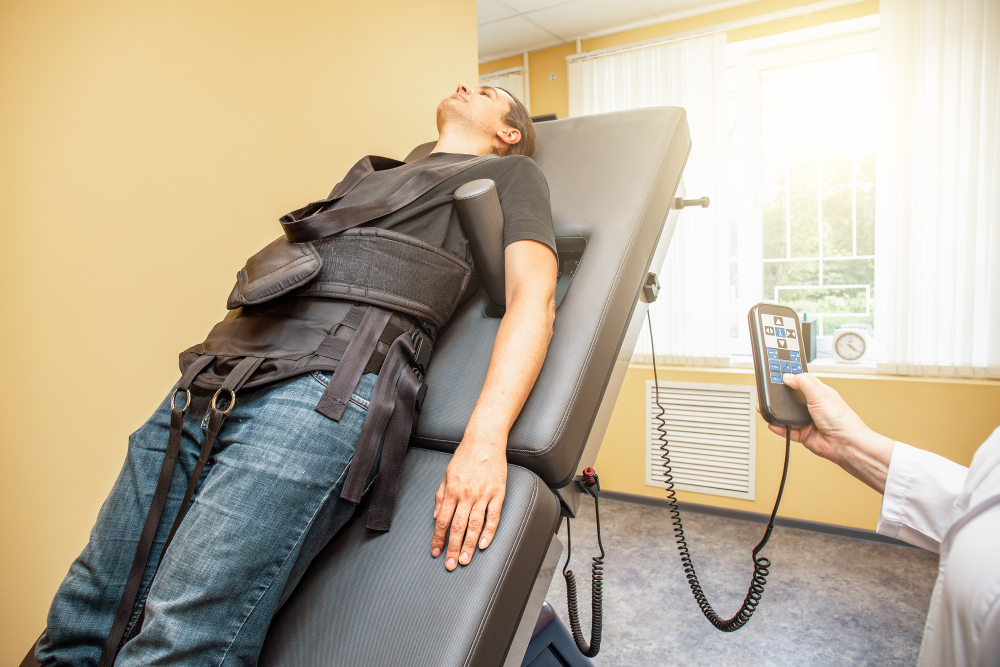
During treatment, you lie comfortably on a specialized table, and a therapist secures a harness around your hips and torso to focus on the areas that need attention. The table then uses a computer-controlled system to apply gentle, rhythmic stretches to your spine. It’s not sudden or jerky; it’s a slow, calming pull followed by a release, and the cycle repeats.
This light traction helps create space between your vertebrae, taking pressure off nerves or bulging discs. Many people describe it as a soothing, therapeutic stretch in their back or neck. The process is carefully controlled and should never be painful. Plus, you’ll always have a safety switch nearby, so you’re always in control.
Who Might Find This Approach Helpful?
This therapy is commonly considered for pain linked to compressed discs and nerves. You might be a candidate if you have conditions like:
A bulging or herniated disc.
Sciatica or radiating arm pain.
Degenerative disc disease.
Persistent symptoms from a past back injury.
It is important to know it is not for everyone. A qualified provider will check that it is safe for you, as it is typically not recommended for people with severe osteoporosis, certain spinal implants, fractures, or for pregnant women.
What to Expect: A Calm, Controlled Process
Spinal decompression is all about steady, gradual healing. You will typically have a few sessions spread out over several weeks, each lasting about 30 to 45 minutes. You stay fully clothed and in control throughout, with a safety switch in your hand that you can use at any time.
The goal is never to cause pain; most people actually find the sessions pretty relaxing. It’s not a quick fix, but many feel their symptoms ease noticeably over time. This relief can help you resume strengthening exercises, which are key to long-term back health.
Taking the Next Step Toward Relief
Living with back pain can make you feel like your world is getting smaller. Spinal decompression is one tool that can help open it back up by addressing a core cause of pain: internal pressure.
To learn more about how spinal decompression relieves pressure on the spine, visit Jassy Chiropractic Center at our Midlothian, Virginia, office. Call (804) 379-1145 to book an appointment today.
https://my.clevelandclinic.org/health/treatments/10874-spinal-decompression-therapy
https://www.webmd.com/back-pain/spinal-decompression-therapy-surgical-nonsurgical


Our Services
Hours of Operation
- Monday, Wednesday, & Thursday
- 7:30am-12:00pm, 1:45pm-6:00pm
- Tuesday
- 7:30am-12:00pm
- Friday
- 7:30am-10:00am
- Saturday & Sunday
- Closed
Contact Info
© 2026 Jassy Chiropractic Center - All Rights Reserved - Accessibility Statement - Sitemap
Powered by:
